


Top 10 Green Faux Pas (originally published on Chicago Now)
This list is based on observations I’ve made about the little things we can do every day to be green. Little things are important because they keep good green practices front of mind and visible to others, hopefully causing others to join in. To find out how you can make the biggest impact, calculate your total carbon footprint.
Here are my top 10 green faux pas:
1. Letting the water run… while you brush your teeth, shave or do the dishes.
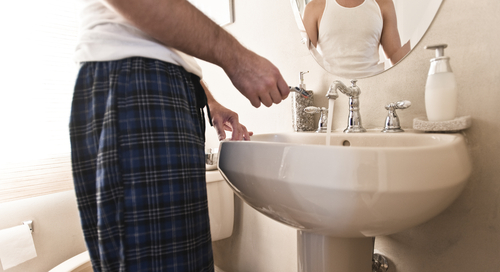
Whether you receive a water bill or not, it’s a precious resource and your tax dollars have gone towards cleaning what is just running down the drain. Consider how much water is wasted while brushing your teeth. If you brush for 1 minute twice a day and your faucet uses 2.5 gpm (gallons/minute) you waste 5 gallons a day and 1,825 gallons a year.
2. Using bottled water at home or work.
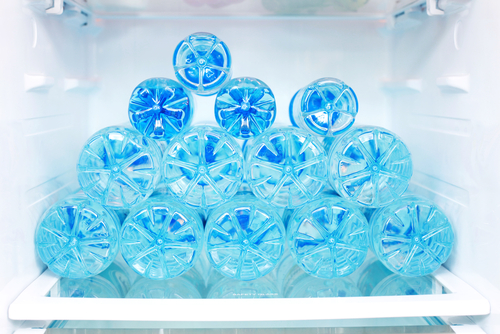
About 40% of bottled water starts out as tap water, and yet we pay quite a bit for it. We do it because we believe it’s better for us but in reality we can never know. It depends on what tap water you’re comparing with what bottled water. According to the EPA, “bottled water is not necessarily safer than your tap water.” Chemicals and bacteria have been discovered in both during testing. The bottom line is that you have more control over the quality of your water by filtering your tap water. Utilities companies have to test tap water often and report their findings. Bottled water companies don’t. Tap water is regulated by the EPA which is thought to have higher standards than the FDA which regulates bottled water. And what about all those plastic bottles? Only 10-20% of them get recycled and they use precious resources in manufacturing and transportation.
3. Leaving lights on all over the house.
Turning lights off is a very easy way to cut down your energy bill. Remember if you have CFLs, only turn them off if you’ll be out of the room for at least 15 minutes since turning them off and on shortens their life.
4. Disposable dishware and utensils at home.
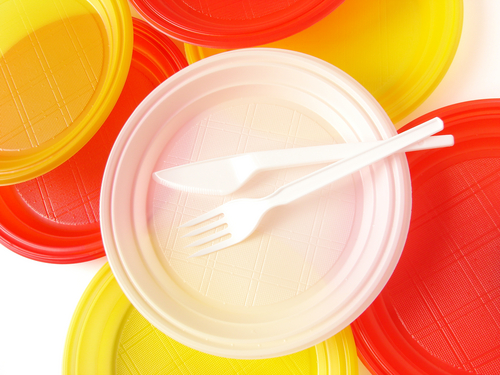
I’m not sure why people do this other than to avoid washing dishes. Using real dishes and washing them is certainly cheaper than buying disposables. Also, petroleum is used in making and transporting these single-use items and they are not recyclable.
5. Using paper towels or paper napkins for everything.
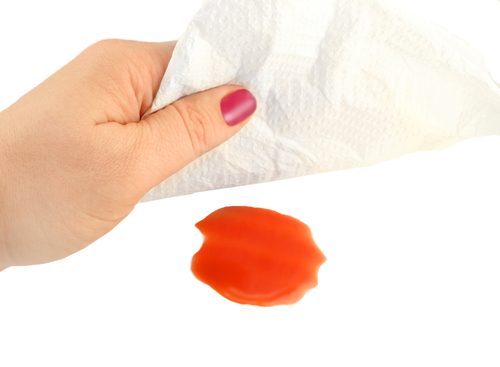
I’m assuming this is out of convenience. We all use them at least sometimes. Switching to towels and cloth napkins is an easy thing to do at home. Check out How to Get Rid of Paper Towels.
6. Using toxic chemicals in the home.
 We don’t want to drink chemicals but we have no problem pouring them down the drain to be filtered out of our drinking water (we hope). We don’t want them in our food but we clean our countertops with them. We don’t want our kids exposed to them but they play on floors cleaned with chemicals, put toys in their mouths that were disinfected with bleach, and play in yards treated with pesticides. We also breathe in the fumes of these products as we use them and well after. It’s counterintuitive.
7. Not choosing recycled.
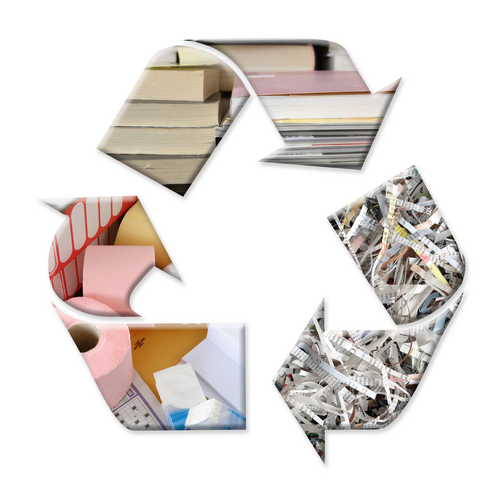
I don’t think anyone will argue against the need for toilet paper, but why not choose recycled? (For some it’s a “softness” issue but I wonder if they can tell a difference.) Many every day items can be purchased as recycled now with no sacrifice.
8. Showerheads using more than 2.5gpm.
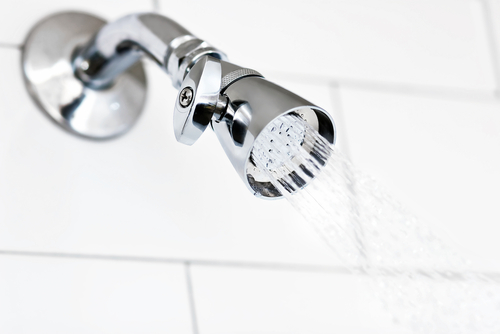
Prior to 1992 when the standard was changed, shower heads used 5 to 8 gallons of water per minute. If you have one of these older models, getting a low-flow model will save a ton of water. Some people enjoy that rainshower-waterfall experience. You can get that experience with certain models that use the current standard of 2.5 gpm. But if you want to save more water, pick a model that uses 1.5 gpm. If you have a pressure issue, pick a low-flow model that works by aerating the water. Some can actually improve the pressure while using less water. There are also high pressure models that use 2.5pgm.
9. Incandescent light bulbs.
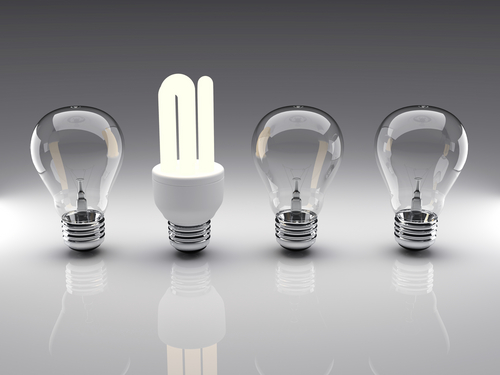
Compact fluorescent light bulbs (CFLs) have been around for a long time and been pushed as the first step in energy efficiency because they give you the same amount of light as incandescents while consuming 75% less energy. Up front cost and perceived light quality issues often keep people from switching. It does take some know-how to pick the right bulb (for the light quality you want and the type of fixture you have) but once you get it right, the cost of the bulb will be more than made up for by a reduction in your energy bill. Check out this guide for picking the right bulb.
10. Plastic (or paper) shopping bags.
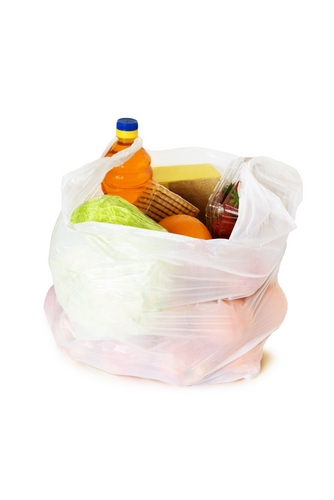
According to Worldwatch Institute, “Each year, Americans throw away some 100 billion polyethylene plastic bags. (Only 0.6 percent of plastic bags are recycled.)” Many people have developed the habit of taking reusable bags to the grocery store, but what about all the other shopping that’s done? We can do more by taking bags with us everywhere and refusing a bag when we only buy a few things that we can easily carry. With so many stores selling reusable bags for so cheap, it’s an easy thing to do.
By Green Mama contributor Kari McLennan,
There is practically nothing I get pleasure from more compared to visiting this blog site each and every afternoon following work. Thanks a bunch for most of the wonderful posts!
wonderful website!